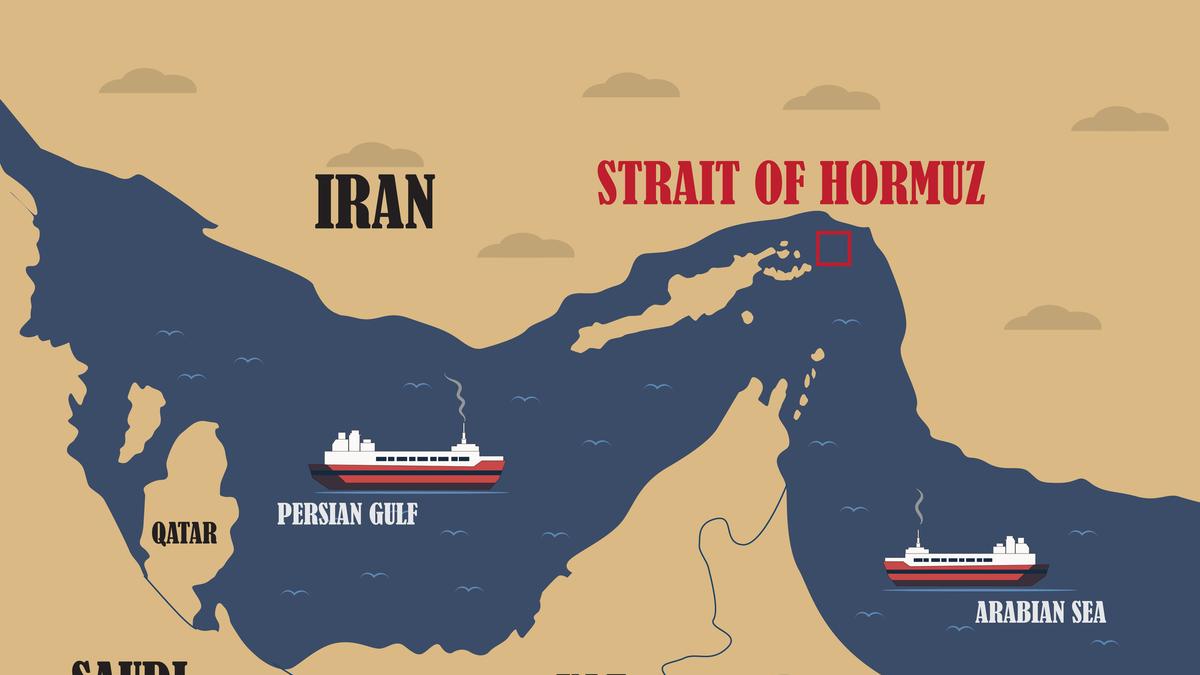
Iran has established a new authority to manage the strategically vital Strait of Hormuz. Iran's Supreme National Security Council announced on Monday the formation of the "Persian Gulf Strait Authority," which will provide real-time information about operations and developments in the critical waterway. The establishment formalizes Iran's de facto control over one of the world's most important shipping routes, through which a significant portion of global oil transport passes.
The new authority will provide "real-time updates on Hormuz Strait operations and latest developments," according to the Supreme National Security Council. The announcement was made through the Iranian security body's official social media channels. Details about the exact structure, staffing, or specific powers of the new institution were not immediately disclosed.
Iran has controlled shipping through the strait since the outbreak of conflict with the United States and Israel in February 2024. Since February 28, Tehran has largely blocked passage for ships, causing significant impacts on global markets. The Strait of Hormuz is considered one of the most important chokepoints in international maritime trade, as approximately one-fifth of the world's traded oil passes through it.
Iran's control over the waterway has given Tehran considerable geopolitical leverage and put pressure on energy markets worldwide. In response to Iran's blockade, the United States has imposed its own naval blockades on Iranian ports. This escalation has led to a tense situation in the strategically important Gulf region, with effects extending far beyond the immediately involved parties.
Beyond military control, Iran appears to be seeking economic benefits from its position. Reports suggest Tehran is considering charging fees to technology companies including Google, Microsoft, Meta, and Amazon for the use of submarine cables that pass beneath the Strait of Hormuz. These cables are crucial for global internet infrastructure, connecting different continents.
Despite the widespread blockade, there are reports of individual ships being permitted passage. Recently, a ship belonging to Malaysian energy company was allowed to transit the strait, staying close to the Iranian coastline before heading toward Oman. This selective passage approval suggests Iran is using its control strategically.
Parallel to announcing the new authority, Iran is conducting diplomatic discussions with various international partners. Iranian Foreign Minister Abbas Araghchi discussed the Strait of Hormuz situation with both his French and South Korean counterparts. In these talks, Iran emphasized that regional insecurity was a result of "aggressive actions by the United States and the Zionist regime against Iran."
South Korean Foreign Minister Cho Hyun stressed the importance of "establishing maritime security and safety in the region and the world" during the discussions and expressed hope that "the diplomatic process would reach a conclusion as soon as possible." These diplomatic efforts show that international actors are seeking solutions to the crisis.
The formation of the Persian Gulf Strait Authority represents a further institutionalization of Iran's claim to control the strait. While the immediate practical implications of the new authority remain unclear, the move signals Tehran's intention to solidify its position in the strategic waterway long-term. The international community is watching developments with concern, as a permanent disruption of shipping traffic through the Strait of Hormuz could have far-reaching consequences for the global economy.
The timing of the announcement coincides with Iran's broader efforts to leverage its geographic position for both strategic and economic advantage. The strait's importance extends beyond oil shipments to include critical digital infrastructure, highlighting the multifaceted nature of Iran's control over this maritime corridor.
As tensions continue in the region, the new authority's role in managing day-to-day operations in the strait will likely become clearer. International shipping companies, energy markets, and diplomatic channels will be closely monitoring how this institutional change affects the complex dynamics surrounding one of the world's most strategically important waterways.
Fast take
Iran has established a new authority to manage the strategically vital Strait of Hormuz.
NOFRAME signal
Medium divergence · 10 Sources · 4 Regions
What remains open
Coverage is not fully split, but it is not identical either. That makes the comparison useful: the fact base shows the common core, while the perspectives show where political, regional, or institutional priorities change the emphasis.
Dossier compass
Which media spaces carry the story and how broad the source base is.
Source mix
Underlit angles
- Detailed impacts on specific countries or industries
- Long-term diplomatic solution approaches
- Comprehensive geopolitical context
Open originals
Go straight to the linked articles. NOFRAME does not replace those sources.
Why it matters
Coverage is not fully split, but it is not identical either. That makes the comparison useful: the fact base shows the common core, while the perspectives show where political, regional, or institutional priorities change the emphasis.
Timeline
Straits Times · May 18, 2026 at 10:05 AM
Iran’s top security council announces new body to manage Strait of Hormuz
Anadolu EN · May 18, 2026 at 11:06 AM
Iran announces new body to manage Strait of Hormuz
TRT World · May 18, 2026 at 11:21 AM
Iran officially announces new body to manage Strait of Hormuz: top security council
The Hindu · May 18, 2026 at 11:27 AM
Iran officially announces new body to manage Strait of Hormuz