Iran's Foreign Minister Abbas Araghchi announced at the United Nations on Friday that Tehran has presented the United States with a concrete plan to reopen the Strait of Hormuz within seven days. The announcement carries significance far beyond the immediate region, since the strait between the Persian Gulf and the Gulf of Oman is one of the world's most critical routes for oil shipments, and any change to its status has direct implications for global energy markets and supply chains.
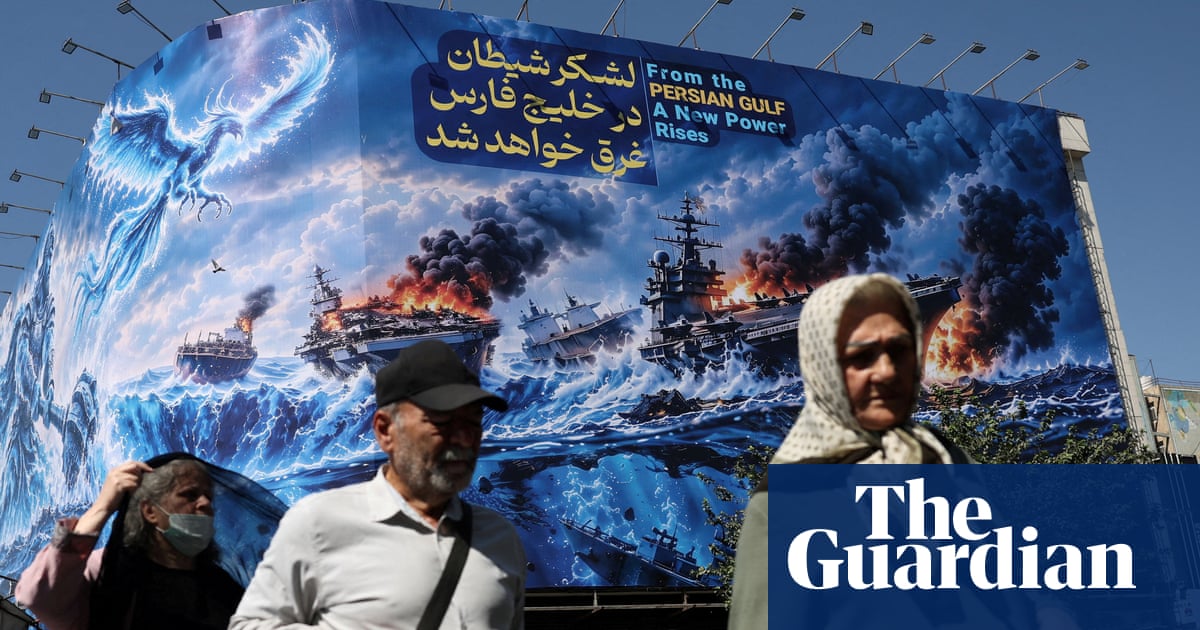
According to Araghchi, the proposal was conveyed to Washington through Qatar. Speaking to reporters outside the UN Security Council, he said Iran had delivered “a concrete seven-day plan” and that, if the necessary conditions were met, the strait could be reopened and normal maritime passage restored within a week. He stated that the choice now rests with the United States.
Multiple reports converge on three central conditions attached to the Iranian offer. First, the United States would need to lift its naval blockade of Iranian ports. Second, Washington would need to waive or suspend sanctions on Iranian oil exports. Third, the plan calls for observance of a ceasefire that would explicitly include Lebanon. By linking these demands together, Tehran is tying the reopening of the strategically vital waterway to broader economic relief and regional security arrangements rather than treating it as an isolated maritime issue.
The proposal follows direct talks on Tuesday between Araghchi and Steve Witkoff, the special envoy of US President Donald Trump. A US official told several outlets, including the BBC and Middle East Eye, that “constructive” and “positive” discussions were taking place with Iran through mediators, and that nuclear issues remained part of the conversation. However, no formal US response or commitment to the seven-day plan has been reported so far.
At the same time, a senior Iranian official, speaking to Reuters on condition of anonymity, offered a notably different emphasis: Iran would show no flexibility on its nuclear program even if the United States accepted the Hormuz proposal. The official said the waterway would remain closed until “all of Iran's conditions are met,” a phrase suggesting there may be additional demands beyond the three publicly outlined points. This follows an earlier statement, reported by Russia's TASS, in which Mohsen Rezaei, secretary of Iran's Supreme National Security Council, said the current seven conditions differ fundamentally from Iran's previous demands, though he did not specify the full list.
Reports differ somewhat in how they characterize the nature of Iran's offer. Araghchi's public remarks framed it as an invitation for Washington to act, stressing that Iran “does not accept coercion, threats, or intimidation” and would not surrender its sovereign rights under pressure. Other reporting, based on the anonymous official's comments, suggests Iran intends to hold firm on its nuclear program regardless of US concessions on Hormuz. This combination of openness on trade and maritime access alongside firmness on nuclear matters has shaped much of the coverage.
Western outlets have also placed the timing of the proposal within the context of US domestic politics. The Guardian noted that the seven-day timetable could offer President Trump a path out of a difficult political situation ahead of the upcoming US midterm elections, but would require him to make difficult concessions — including lifting asset freezes, permitting Iranian oil exports, and potentially working to rein in Israeli activity in Lebanon. How significant these trade-offs would be politically is weighed differently across various reports.
Indian outlets, including India Today, have additionally noted that the proposal emerged around the same time as a discussion between President Trump and Chinese President Xi Jinping concerning the wider Middle East conflict, pointing to an international dimension to the diplomacy surrounding the plan, although details of that conversation have not been made public.
Several questions remain unresolved. It is not yet clear how or when Washington will formally respond to Iran's proposal, whether the United States is prepared to meet the stated conditions, or how Iran's simultaneous insistence on nuclear inflexibility might affect any resulting negotiations. The complete scope of what the anonymous Iranian official described as “all of Iran's conditions” has also not been publicly disclosed. The coming days are likely to clarify whether the proposal develops into a concrete agreement or whether the Strait of Hormuz remains a point of contention between Tehran and Washington.
Fast take
Iran's Foreign Minister Abbas Araghchi announced at the United Nations on Friday that Tehran has presented the United States with a concrete plan to reopen the Strait of Hormuz within seven days.
NOFRAME signal
Stable coverage · 14 Sources · 5 Regions
What remains open
The source picture is relatively consistent. That still makes the details worth reading: small differences in wording, omissions, and source selection can reveal what each region treats as important.
Dossier compass
Which media spaces carry the story and how broad the source base is.
Source mix
Underlit angles
- No notable omissions in the current source comparison.
Open originals
Go straight to the linked articles. NOFRAME does not replace those sources.
Why it matters
The source picture is relatively consistent. That still makes the details worth reading: small differences in wording, omissions, and source selection can reveal what each region treats as important.
Timeline
Al Jazeera · September 26, 2026 at 12:33 AM
Iran to reopen Strait of Hormuz within a week if US agrees to plan
TRT World · September 26, 2026 at 12:37 AM
Iran proposes US deal to reopen Strait of Hormuz in seven days
India Today · September 26, 2026 at 01:15 AM
Iran puts 7-day Hormuz reopening plan as Trump-Xi discuss Middle East war
BBC World · September 26, 2026 at 01:38 AM
Iran offers US deal to reopen Strait of Hormuz in seven days