Israel has announced legal action against The New York Times and journalist Nicholas Kristof following the publication of an article alleging widespread sexual violence against Palestinian detainees by Israeli forces. Prime Minister Benjamin Netanyahu said Thursday he had instructed his legal advisers to consider the harshest legal action against the newspaper and the veteran journalist.
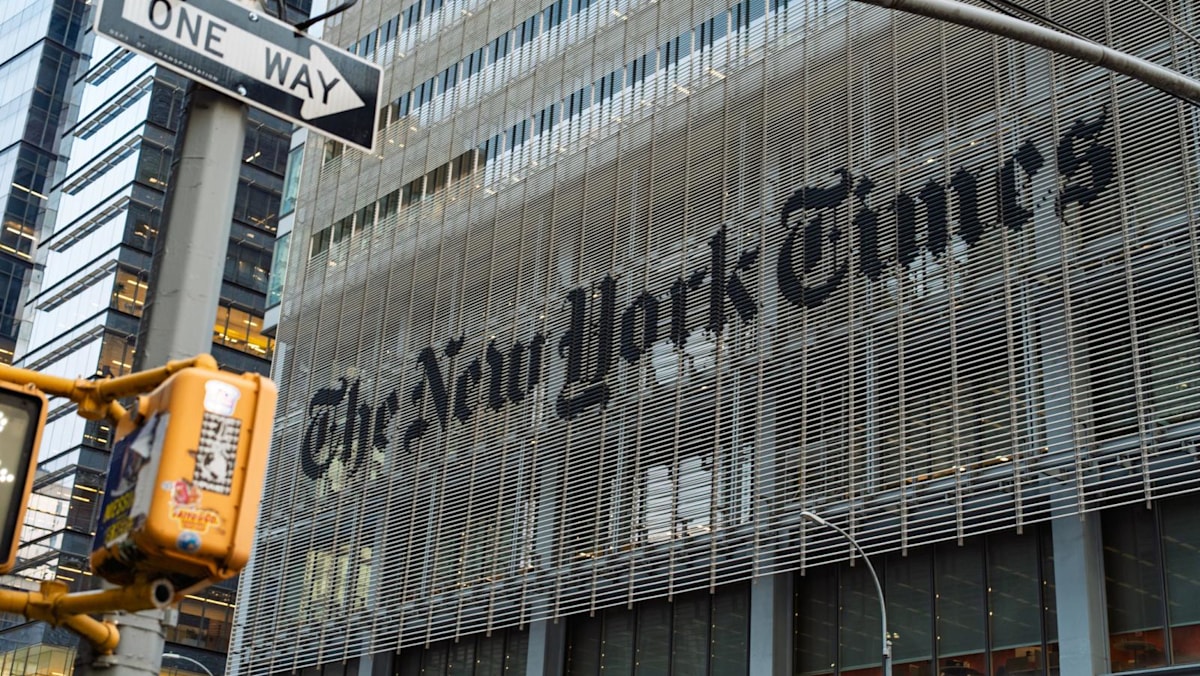
The controversial article by Nicholas Kristof, a longtime New York Times columnist, reported testimonies from 14 Palestinian men, women and children who claimed to have experienced sexual assault by Israeli soldiers, prison guards and settlers. Kristof had traveled to the occupied West Bank to gather witness testimonies for his report. The accounts detailed various forms of sexual violence allegedly occurring in Israeli detention facilities.
Israel's Foreign Ministry responded sharply to the publication, calling Kristof's article one of the most hideous and distorted lies ever published against Israel in the modern press. The Prime Minister's office accused The New York Times of deliberately spreading false and defamatory claims. The Israeli government categorically denies the allegations made in the article.
The New York Times defended its reporting and rejected Israeli accusations. The newspaper stated that the article was based on careful journalistic research and documented witness testimonies. The publication particularly rejected Israeli claims that the article was deliberately timed to undermine an Israeli NGO report on sexual violence by Hamas on October 7. The newspaper called this allegation false.
International reactions to the allegations have emerged from various quarters. Germany called for an investigation into the accusations and urged thorough clarification. Italian EU lawmaker Danilo Della Valle described the alleged abuse as crimes against humanity and called for an international investigation. Human Rights Watch supported these demands for an independent review of the allegations.
Legally, Israel faces significant challenges in pursuing a defamation case against The New York Times. Constitutional law experts point out that the burden of proof for plaintiffs in such cases is extraordinarily high, particularly when involving press freedom and investigative journalism. In the United States, media outlets enjoy extensive legal protection when reporting on matters of public concern.
The controversy highlights ongoing tensions over media coverage of the Israeli-Palestinian conflict. Both sides regularly accuse each other of human rights violations, while international observers call for independent investigations. The competing narratives about events in the region repeatedly lead to diplomatic and legal disputes.
The case also raises fundamental questions about the role of journalism in conflict zones. While Israel characterizes the reporting as defamatory, media representatives view this as an attack on press freedom. The further development of the announced legal dispute will show how courts balance personality rights and press freedom when dealing with sensitive geopolitical topics.
The timing of the legal announcement has drawn additional scrutiny, coming amid broader debates about media coverage of the conflict. Israeli officials have previously criticized international media for what they perceive as biased reporting, while journalists and press freedom advocates argue that such legal threats could have a chilling effect on investigative reporting in conflict zones.
The outcome of any potential lawsuit could set important precedents for how media organizations report on sensitive allegations involving state actors and human rights issues. Legal experts note that successful defamation cases against major news organizations require proving not only that statements were false, but also that they were published with actual malice or reckless disregard for the truth.
Fast take
Israel has announced legal action against The New York Times and journalist Nicholas Kristof following the publication of an article alleging widespread sexual violence against Palestinian detainees by Israeli forces.
NOFRAME signal
Medium divergence · 8 Sources · 3 Regions
What remains open
Coverage is not fully split, but it is not identical either. That makes the comparison useful: the fact base shows the common core, while the perspectives show where political, regional, or institutional priorities change the emphasis.
Dossier compass
Which media spaces carry the story and how broad the source base is.
Source mix
Underlit angles
- Legal challenges for defamation cases
- Israel's categorical rejection of allegations
- Detailed description of abuse allegations
Open originals
Go straight to the linked articles. NOFRAME does not replace those sources.
Why it matters
Coverage is not fully split, but it is not identical either. That makes the comparison useful: the fact base shows the common core, while the perspectives show where political, regional, or institutional priorities change the emphasis.
Timeline
Straits Times · May 14, 2026 at 02:28 PM
Israel to sue New York Times over article on rape of Palestinian detainees, Netanyahu says
Al-Monitor · May 14, 2026 at 02:36 PM
Israel to sue New York Times over article on rape of Palestinian detainees, Netanyahu says
Middle East Eye · May 14, 2026 at 02:40 PM
Israel to sue New York Times over article describing its rape of Palestinians
Globe and Mail · May 14, 2026 at 03:45 PM
Israel to sue New York Times over article on sexual violence against Palestinian detainees