The UN Security Council on Thursday rejected a United States-sponsored resolution that would have extended the mandate of the independent Panel of Experts monitoring the enforcement of sanctions against Iran. Eleven of the council's 15 members, including the United States, Britain and France, voted in favor of the extension. Russia and China, both permanent members with veto power, voted against the measure, effectively blocking it. Pakistan abstained from the vote.
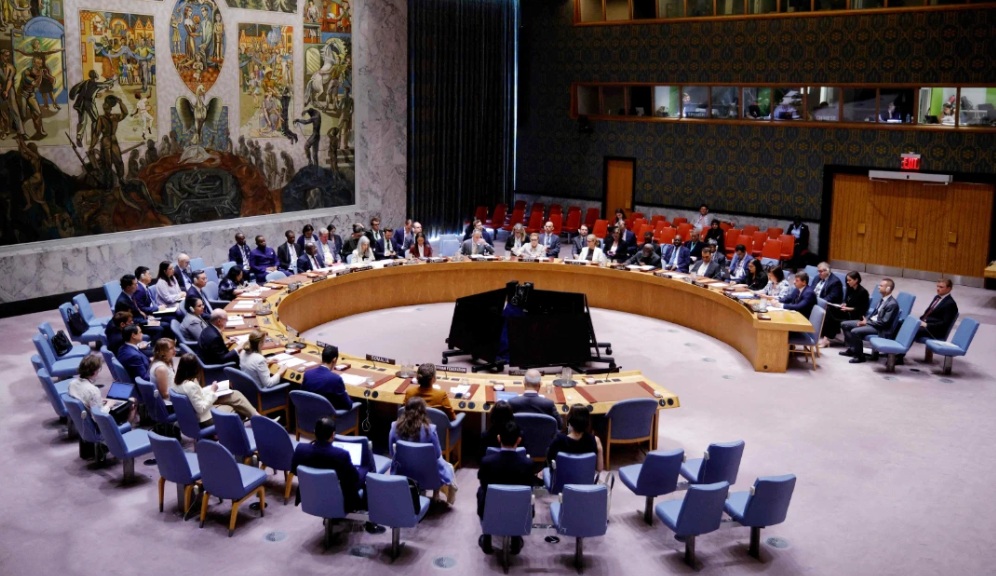
According to multiple accounts, the session was contentious. Western diplomats accused Russia and China of using their veto to shield Tehran from continued international scrutiny, despite eleven countries supporting the panel's renewal. Russia and China defended their position by arguing that the legal basis for the panel's work no longer exists.
The dispute traces back to Security Council Resolution 2231, adopted in 2015 to formalize the Joint Comprehensive Plan of Action (JCPOA), the nuclear deal with Iran. A year ago, all UN sanctions on Iran that had been suspended under the deal were reimposed after France, Britain and Germany accused Tehran of violating the agreement. Iran has denied the allegations and maintains it is not seeking nuclear weapons.
Since the reimposition of sanctions, Russia and China have consistently argued that because Resolution 2231 has expired, there is no remaining legal basis for continued Security Council engagement with Iran's nuclear file. Both countries reiterated this argument in the context of Thursday's vote on the expert panel's mandate.
Iran welcomed the outcome. Iran's mission to the United Nations publicly thanked Russia and China on social media platform X, praising what it called their 'consistent and principled positions.' Tehran characterized the US-sponsored resolution as a 'politically motivated' attempt to renew pressure on the country.
Pakistan took a neutral stance in the vote. Pakistan's Permanent Representative to the UN, Asim Iftikhar Ahmad, stressed that diplomacy and dialogue remain essential to resolving the Iran nuclear issue and underscored the important role of the International Atomic Energy Agency (IAEA) in the matter.
The rejection of the resolution means the Panel of Experts, which had provided technical and factual grounding for monitoring sanctions enforcement, will not continue its work under a renewed mandate. This raises questions about the future of independent oversight regarding measures imposed on Iran.
The episode is part of a broader pattern of disagreements within the Security Council, where Western states and the Russia-China bloc have increasingly diverged over how to handle Iran policy. Observers view the vote as another indication of deep divisions among major powers regarding nonproliferation policy and Iran's standing within the United Nations system.
Whether and how an alternative mechanism for monitoring Iran sanctions might be established remains unclear following the vote. Given the unresolved disagreements among the veto powers, the diplomatic dispute over Iran's nuclear program is likely to continue.
Fast take
The UN Security Council on Thursday rejected a United States-sponsored resolution that would have extended the mandate of the independent Panel of Experts monitoring the enforcement of sanctions against Iran.
NOFRAME signal
Medium divergence · 10 Sources · 5 Regions
What remains open
Coverage is not fully split, but it is not identical either. That makes the comparison useful: the fact base shows the common core, while the perspectives show where political, regional, or institutional priorities change the emphasis.
Dossier compass
Which media spaces carry the story and how broad the source base is.
Source mix
Underlit angles
- Detailed Western criticism of Russia and China is less thoroughly presented
- The Western view that Russia and China are shielding Iran is barely addressed
- Details on the argument regarding Resolution 2231 are missing
Open originals
Go straight to the linked articles. NOFRAME does not replace those sources.
Why it matters
Coverage is not fully split, but it is not identical either. That makes the comparison useful: the fact base shows the common core, while the perspectives show where political, regional, or institutional priorities change the emphasis.
Timeline
Middle East Eye · September 17, 2026 at 09:08 PM
Iran thanks Russia, China for opposing ‘politically motivated’ US resolution at Security Council
Arab News · September 17, 2026 at 09:16 PM
Russia, China end mandate for independent monitoring of UN sanctions on Iran
India Today · September 17, 2026 at 09:24 PM
US sanctions bill lifts pressure on Russia and boosts Ukraine's leverage
NY Times World · September 17, 2026 at 09:34 PM
Russia and China Veto U.S. Bid to Renew U.N. Monitoring of Iran Nuclear Program