OpenAI CEO Sam Altman testified in court that Elon Musk wanted 90 percent control of the AI company during its early development, as part of a high-stakes legal battle that could reshape the future of the ChatGPT maker.
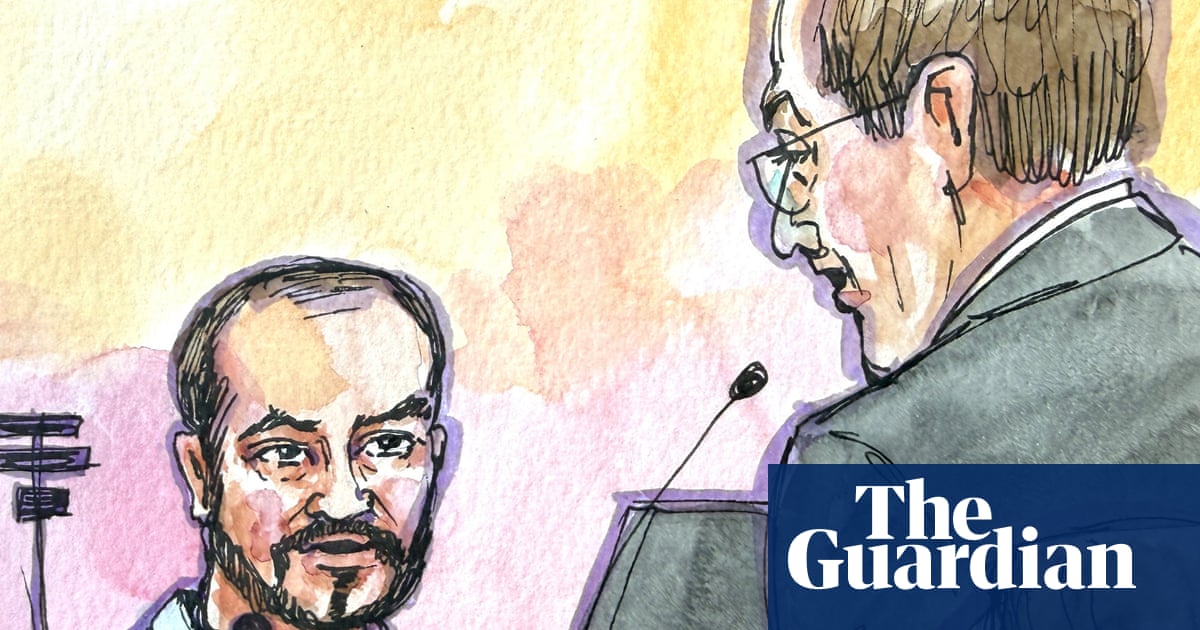
The testimony came during the third week of proceedings in which Musk accuses OpenAI of betraying its original nonprofit mission. The Tesla and SpaceX CEO claims the company misappropriated his founding donations to build what is now valued at an $850 billion empire. Musk alleges that Altman "stole" the charity organization.
Altman firmly rejected these accusations during his court appearance. "It does not fit with my concept of the words 'stealing a charity' to look at what is happening here," the OpenAI chief executive stated. Instead, Altman claimed it was Musk who was interested in seizing control of OpenAI and making money from it.
OpenAI counters that Musk's lawsuit is motivated by petty revenge, having failed to seize majority control of the commercial entity. The company points out that Musk is now also an AI competitor with his xAI venture, which potentially colors his motivations in pursuing this legal action.
A key witness in the proceedings has been Microsoft CEO Satya Nadella, who testified before the jury about his company's substantial investment in OpenAI. Nadella told the court that Microsoft's investment in the nonprofit arm, which now owns around a quarter of OpenAI Group PBC, had helped create "one of the largest, most well-funded nonprofits in the world."
The origins of OpenAI trace back to 2015 when it was founded as a nonprofit organization, with Musk as one of the primary financial backers. However, Musk left the board in 2018, reportedly due to disagreements over the company's direction. Since then, OpenAI has evolved into a hybrid structure that combines both nonprofit and commercial elements.
The trial has provided unusually detailed insights into OpenAI's typically secretive operations. Despite its name suggesting openness, OpenAI is usually extremely secretive about its operations and promotes a carefully crafted public image. Through Musk's case against the startup, however, the artificial intelligence firm has been forced to publicly contend with some of the messiest parts of its rise to power.
Observers of the proceedings note that neither tech titan has emerged as a particularly sympathetic figure as the case has unfolded. The trial has exposed various internal tensions and conflicts within OpenAI that were previously not public knowledge.
The implications of this legal battle could be far-reaching. OpenAI is preparing for a possible initial public offering, and the outcome of the trial may determine the future of the company and its leadership structure. The case could also set precedents for other AI companies undergoing similar transformations from nonprofit to commercial structures.
The lawsuit raises fundamental questions about governance and accountability in the rapidly growing AI industry, particularly for companies that began with missions to serve the public good. As artificial intelligence becomes increasingly central to the global economy, the resolution of this dispute could influence how similar organizations structure themselves and manage the tension between public benefit and commercial success.
The trial continues to feature testimony from a who's who of the tech industry, providing rare public insights into the decision-making processes and internal dynamics of one of the world's most influential AI companies. The outcome will likely have significant implications not just for the parties involved, but for the broader AI ecosystem and its governance structures.
Fast take
OpenAI CEO Sam Altman testified in court that Elon Musk wanted 90 percent control of the AI company during its early development, as part of a high-stakes legal battle that could reshape the future of the ChatGPT maker.
NOFRAME signal
Medium divergence · 7 Sources · 4 Regions
What remains open
Coverage is not fully split, but it is not identical either. That makes the comparison useful: the fact base shows the common core, while the perspectives show where political, regional, or institutional priorities change the emphasis.
Dossier compass
Which media spaces carry the story and how broad the source base is.
Source mix
Underlit angles
- Fewer details about specific accusations between Musk and Altman
- Less emphasis on OpenAI's financial valuation
- Less focus on the original nonprofit mission
Open originals
Go straight to the linked articles. NOFRAME does not replace those sources.
Why it matters
Coverage is not fully split, but it is not identical either. That makes the comparison useful: the fact base shows the common core, while the perspectives show where political, regional, or institutional priorities change the emphasis.
Timeline
NDTV World · May 12, 2026 at 09:55 PM
At Tech Trial, Sam Altman Says Elon Musk Wanted 90% Stake In OpenAI
Al Jazeera · May 12, 2026 at 10:09 PM
Sam Altman says Elon Musk wanted 90 percent of OpenAI in high-stakes trial
Globe and Mail · May 12, 2026 at 10:59 PM
OpenAI chief Sam Altman says Elon Musk wanted control of company
The Independent · May 12, 2026 at 11:49 PM
Sam Altman testifies Elon Musk wanted greater control of OpenAI in early days