South Korean President Lee Jae Myung said on Friday that his country will not deploy troops in a combat capacity as part of the US-Israeli war against Iran, a statement made amid escalating tensions in the Persian Gulf, where the Strait of Hormuz — one of the world's most critical oil transit routes — has increasingly become the site of military incidents.
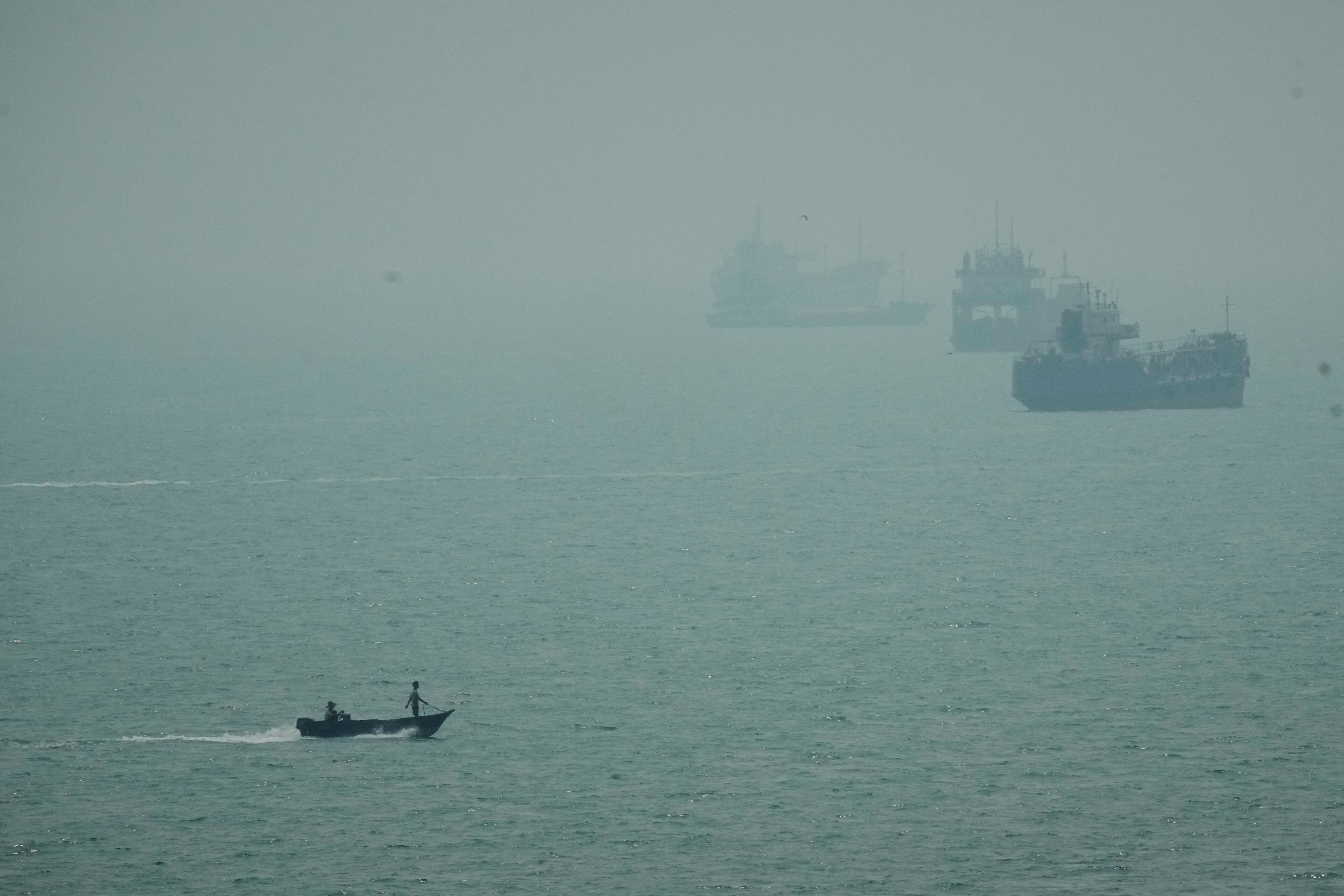
The statement comes against a backdrop of sustained pressure from Washington for Seoul to take a more active military role in the Middle East conflict. Lee made clear that while South Korea is reviewing how it might contribute to safeguarding shipping lanes, this should not be equated with joining the war. Specifically, he said, any measures under consideration would focus on protecting merchant ships, oil transport routes and South Korean citizens in the region, not combat involvement.
The Strait of Hormuz has seen multiple incidents in recent days. Iran's Islamic Revolutionary Guard Corps (IRGC) Navy said it struck a Togo-flagged oil tanker attempting what it described as an 'illegal passage' through the strait, after which the vessel came to a halt following a fire. Separately, a British maritime agency reported that another tanker was hit by an unknown projectile, causing a fire that was later extinguished; no crew injuries were reported.
Against this backdrop, South Korea's foreign minister, Cho Hyun, had earlier stressed that no final decision had been made regarding any military deployment to the region. He said all relevant factors were being reviewed and that international cooperation would be prioritized, speaking ahead of talks with US Secretary of State Marco Rubio in Washington.
President Lee also pointed to South Korea's existing naval presence off the coast of Somalia, maintained as part of an anti-piracy mission, which could serve as a possible model for a limited role in the Gulf region without drawing South Korea directly into the conflict with Iran.
Beyond the Middle East question, Lee addressed US-North Korea relations, saying President Donald Trump 'clearly' wants dialogue with Pyongyang, and that Seoul would try to facilitate any potential talks between Washington and North Korea. Trump had earlier said he wants to revive the personal rapport he claims to have built with North Korean leader Kim Jong Un during his first term, and plans to meet him later this year. He also said it was important to 'get along' with Kim, noting that North Korea now possesses 57 'very powerful' nuclear weapons.
These conciliatory signals stand in contrast to sharp criticism from Pyongyang. Kim Yo Jong, sister of the North Korean leader, accused the United States of driving tensions on the Korean Peninsula through joint military exercises with South Korea and Japan, framing them as a driver of North Korea's continued nuclear buildup. North Korea also warned of a 'more offensive' response to the drills.
The overall situation remains volatile on multiple fronts: in the Persian Gulf, due to ongoing incidents in the Strait of Hormuz and uncertainty over further escalation between the US, Israel and Iran; and on the Korean Peninsula, due to the tension between announced diplomacy and continued shows of force through military exercises. Trump himself has said he faces a 'big decision' on whether to 'annihilate' his Iranian foes, adding that 'anything could happen.'
It remains to be seen how South Korea's position develops in the coming weeks, particularly whether and in what form a naval presence in the Gulf is actually realized, and whether direct talks between Washington and Pyongyang materialize.
Fast take
South Korean President Lee Jae Myung said on Friday that his country will not deploy troops in a combat capacity as part of the US-Israeli war against Iran, a statement made amid escalating tensions in the Persian Gulf, where the Strait of Hormuz — one of the world's most critical oil transit routes — has increasingly become the site of military incidents.
NOFRAME signal
Medium divergence · 12 Sources · 3 Regions
What remains open
Coverage is not fully split, but it is not identical either. That makes the comparison useful: the fact base shows the common core, while the perspectives show where political, regional, or institutional priorities change the emphasis.
Dossier compass
Which media spaces carry the story and how broad the source base is.
Source mix
Underlit angles
- Details on inter-Korean diplomacy and Kim Yo Jong's criticism are barely elaborated
- Details on the Hormuz tanker incidents are barely elaborated
- Details on South Korean domestic politics and diplomacy with Pyongyang are largely absent
Open originals
Go straight to the linked articles. NOFRAME does not replace those sources.
Why it matters
Coverage is not fully split, but it is not identical either. That makes the comparison useful: the fact base shows the common core, while the perspectives show where political, regional, or institutional priorities change the emphasis.
Timeline
Arab News · September 18, 2026 at 09:49 AM
Tanker struck by ‘unknown projectile’ in Hormuz: British maritime agency
India Today · September 18, 2026 at 09:54 AM
Iran strikes tanker in Hormuz as South Korea weighs naval expansion
Nikkei Asia · September 18, 2026 at 10:03 AM
South Korea's Lee rules out any combat deployment to Middle East
Rudaw · September 18, 2026 at 02:00 PM
IRGC strikes tanker over 'illegal passage' through Hormuz Strait