Days before a planned meeting between US President Donald Trump and Chinese leader Xi Jinping in Washington, China's ambassador to the United States has taken a firm public stance. Taiwan and human rights, he said on Wednesday, are "red lines" for China that cannot be crossed. The statement comes at a moment when both countries appear to be seeking ways to bring a measure of stability to a relationship strained by disputes ranging from trade to Taiwan.
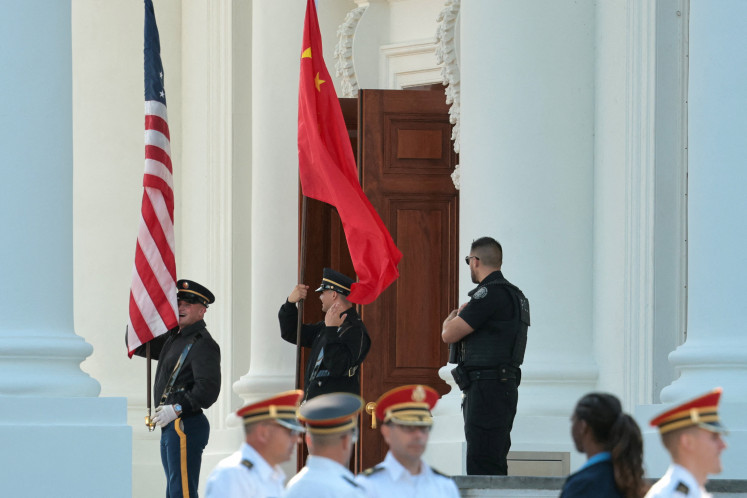
According to multiple reports, Xi Jinping is set to travel to Washington this week for talks with Trump, in what is being described as a closely watched summit given months of tension between the world's two largest economies over trade, technology and Taiwan-related issues. The ambassador's declaration that Taiwan and human rights are non-negotiable for Beijing is being read by observers as a clear signal of which topics China considers off-limits for compromise as the two leaders prepare to meet, and possibly as an attempt to shape expectations ahead of the summit.
The phrase "red line" has long been used in Chinese diplomacy to denote core interests that are considered non-negotiable. Taiwan has consistently occupied a central place among these interests: Beijing regards the island as part of its own territory and firmly rejects any international recognition of Taiwan as an independent state. Criticism of China's human rights record, including issues related to Xinjiang and Hong Kong, is likewise routinely dismissed by Chinese authorities as unwarranted interference in internal affairs. The renewed emphasis on these two issues just ahead of the Trump-Xi summit suggests they could feature in the upcoming talks, or that Beijing is seeking to manage expectations before the meeting takes place.
At the same time, several reports note that both countries appear eager to bring stability to their relationship despite the ambassador's pointed remarks. This suggests the upcoming summit is not primarily intended as a confrontation but rather as an opportunity to take stock of the relationship and potentially ease some of the tension that has built up in recent months. The available reports do not specify in detail which topics will dominate the talks, though trade disputes and the Taiwan issue are widely cited as two of the most significant points of friction between the two countries.
Ahead of the Trump-Xi summit, diplomatic activity has also taken place on other fronts. Trump and Japanese leader Takaichi met for talks in which, according to reports, the two reaffirmed their countries' alliance. Issues related to China, including economic security, were reportedly central to their discussion. It was described as the first formal summit between the two leaders since March. The timing of this meeting so close to the US-China summit is seen by observers as an indication that Washington is coordinating its approach toward Beijing with regional partners such as Japan.
International coverage of the Chinese ambassador's remarks has been widespread, with news outlets in Japan, India and Indonesia, among others, reporting on the "red lines" comments within a similar timeframe. This reflects the significant international attention being paid to the upcoming Trump-Xi meeting and to the broader question of where US-China relations are headed.
What remains unclear at this stage is what concrete outcomes the Trump-Xi meeting might produce, and whether China's stated "red lines" will overshadow the talks or whether both sides will still manage to make progress on other contentious issues, such as trade. It is also uncertain whether the US side will directly address China's positions on Taiwan and human rights in its own statements before or during the summit. The coming days are likely to reveal how each government approaches these sensitive topics and what effect this has on the broader trajectory of bilateral relations.
Overall, the picture that emerges is one in which both major powers appear interested in easing tensions to some degree, while at the same time standing firm on their core positions regarding key disputes. The Trump-Xi summit therefore seems less likely to mark a fundamental shift in the relationship than to represent an attempt to establish a workable framework for managing ongoing disagreements between the two countries.
Fast take
Days before a planned meeting between US President Donald Trump and Chinese leader Xi Jinping in Washington, China's ambassador to the United States has taken a firm public stance.
NOFRAME signal
Stable coverage · 4 Sources · 2 Regions
What remains open
The source picture is relatively consistent. That still makes the details worth reading: small differences in wording, omissions, and source selection can reveal what each region treats as important.
Dossier compass
Which media spaces carry the story and how broad the source base is.
Source mix
Underlit angles
- No notable omissions in the current source comparison.
Open originals
Go straight to the linked articles. NOFRAME does not replace those sources.
Why it matters
The source picture is relatively consistent. That still makes the details worth reading: small differences in wording, omissions, and source selection can reveal what each region treats as important.
Timeline
Jakarta Post · September 23, 2026 at 06:38 AM
Taiwan, human rights 'red lines' for China, ambassador says ahead of Trump, Xi meeting
Japan Times · September 23, 2026 at 07:26 AM
Taiwan and human rights are ‘red lines’ for China, ambassador says ahead of Trump-Xi meeting
NDTV World · September 23, 2026 at 07:59 AM
China's US Ambassador Warns On 'Red Lines' Ahead Of Trump, Xi Meeting
Nikkei Asia · September 23, 2026 at 10:03 AM
Trump, Takaichi reaffirm alliance days before US-China summit