Tensions between the United States and Iran have escalated sharply in recent days. US President Donald Trump announced on Tuesday that he was reimposing a naval blockade on all Iranian ports, while also threatening to strike power plants and bridges inside Iran next week unless Tehran returns to the negotiating table. The announcement marks a further escalation in a military exchange between the two countries that has continued for several days and directly concerns the Strait of Hormuz, through which, according to several reports, roughly a fifth of the world's oil and natural gas supplies pass.
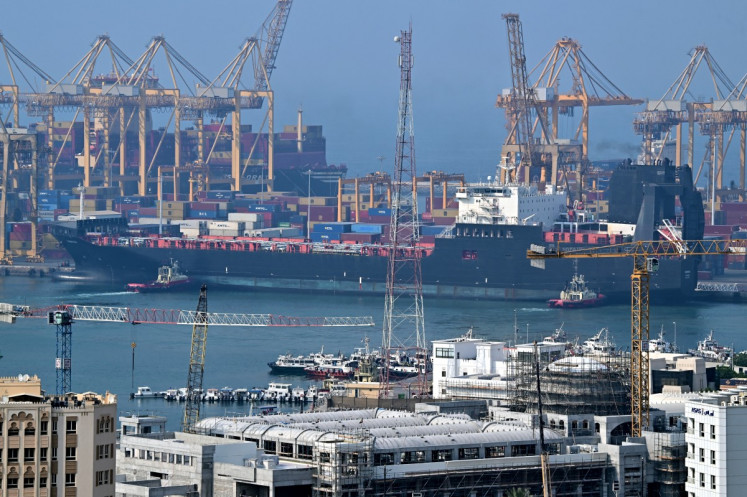
Already on Monday, the US military had carried out strikes against Iran for a third consecutive night, according to CGTN. In response, two tankers came under Iranian fire in the Strait of Hormuz. Trump stated at the time that the US was reinstating its blockade of Iranian shipping in the Gulf while also pledging to keep the strategically vital waterway open — though for a fee. Those plans to charge ships transiting the Strait of Hormuz have since been dropped, according to a report by the New York Times, after the proposal raised concerns about rising global energy prices.
On Tuesday, July 14, two vessels were struck by Iranian missiles in the waterway, according to the Kyiv Independent, injuring two Ukrainian crew members among others. The United States said it would hold Iran accountable for such attacks on vessels in the Strait of Hormuz. Separately, TASS reported an explosion on Iran's Hengam Island in the Strait of Hormuz, though no further details on the cause or extent of the incident were provided.
The US blockade formally took effect on Wednesday, according to Al-Monitor and the Jakarta Post. Shipping data showed that the number of vessels transiting the Strait of Hormuz actually increased on Tuesday, with most of them linked to Iranian trade, apparently in anticipation of the impending blockade. Trump also indicated that, in his view, the strait was closed only to Iran, pointing to what he described as "greater alternatives" for oil deliveries, according to TASS.
Iran's government responded to the renewed blockade with a significant step: according to India Today and NDTV, Tehran withdrew from a previously agreed memorandum of understanding with the United States. Iran said the US blockade had effectively dismantled the agreement. At the same time, Tehran vowed to pursue full control over the Strait of Hormuz. Geo News reported that Iran rejected American pressure and said it would not negotiate under such coercion.
The two countries are now locked in an open contest for control of the waterway, which is of central importance to global energy trade. NDTV described the situation as one shaped by days of retaliatory strikes across the Middle East and both nations' attempts to assert control over the strait, warning that the region risks being pushed toward all-out war. The Independent also reported that Trump had threatened to strike civilian targets inside Iran should the situation fail to de-escalate.
International coverage of the events shows some differences in emphasis: while several reports focus primarily on the renewed blockade and the threat against energy targets, others place greater weight on Iran's withdrawal from the agreement and its declared intent to seize control of Hormuz. However, reports consistently describe direct military clashes, including attacks on tankers and an explosion on Iranian territory.
Several questions remain unresolved, including how Iran will respond to the threatened strikes on power plants and bridges, and whether diplomatic contacts will resume in the coming days. The precise circumstances of the explosion on Hengam Island and the extent of damage to the vessels struck on July 14 have not been fully clarified. Given the importance of the Strait of Hormuz to global energy trade, further developments in the region are likely to be closely watched internationally.
Fast take
Tensions between the United States and Iran have escalated sharply in recent days.
NOFRAME signal
Stable coverage · 11 Sources · 5 Regions
What remains open
The source picture is relatively consistent. That still makes the details worth reading: small differences in wording, omissions, and source selection can reveal what each region treats as important.
Dossier compass
Which media spaces carry the story and how broad the source base is.
Source mix
Underlit angles
- No notable omissions in the current source comparison.
Open originals
Go straight to the linked articles. NOFRAME does not replace those sources.
Why it matters
The source picture is relatively consistent. That still makes the details worth reading: small differences in wording, omissions, and source selection can reveal what each region treats as important.
Timeline
NDTV World · July 15, 2026 at 04:52 AM
'Hormuz Control Is A Must': Iran Withdraws From US Deal Over New Blockade
India Today · July 15, 2026 at 05:19 AM
Iran withdraws from US peace deal over blockade, vows full control of Hormuz
Al-Monitor · July 15, 2026 at 05:46 AM
Iran-linked vessels pass through Hormuz ahead of US blockade
The Independent · July 15, 2026 at 05:58 AM
Iran-US war latest: Trump threatens to hit civilian targets in Iran as US resumes Strait of Hormuz blockade