US President Donald Trump told the United Nations General Assembly in New York this week that he expects to reach a deal with Iran after the upcoming midterm elections. Speaking on Tuesday, he said he believed an agreement would be struck “right after the election,” arguing it would not make sense for Tehran to keep refusing, and suggesting Iranian leaders were waiting to see how he performs in the November 3 midterms. The remarks come nearly seven months into an ongoing military conflict between the United States and Iran, which began with US-Israeli strikes in February.
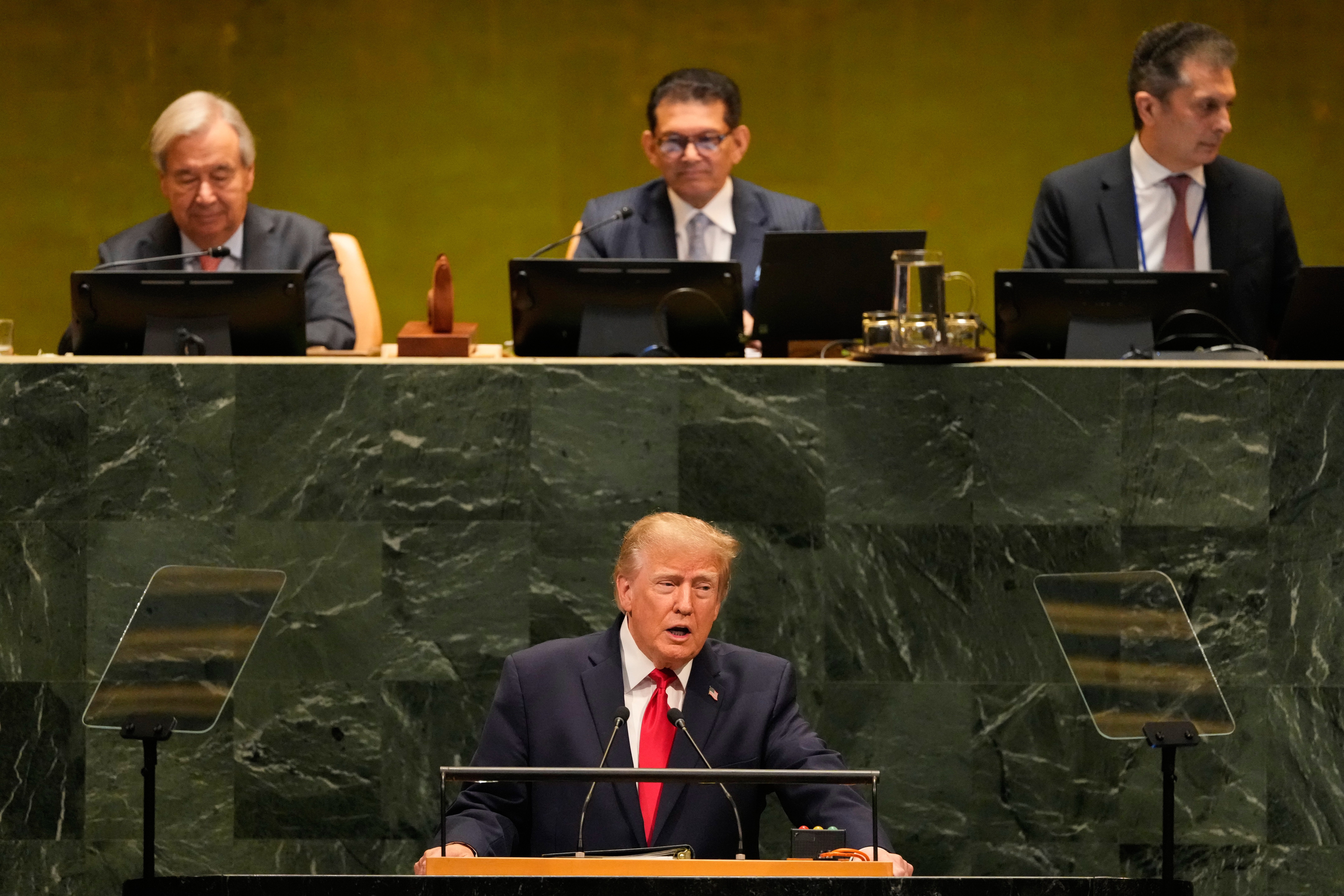
At the same time, Trump paired his prediction of a possible deal with sharp warnings. He said he faced a “big decision” — either to reach an agreement with Iran or to “annihilate” the country. He argued that the war with Iran had prevented Tehran from obtaining a nuclear weapon and reiterated that he would never allow Iran to possess one. According to several reports, he also accused Iran of repeatedly rejecting past US offers for a nuclear deal. He described Iran as the former “bully of the Middle East,” saying it no longer holds that role.
Trump also called on other nations to join the United States in economically isolating Iran in order to pressure it into negotiations. This combination of openness to talks and continued threats defined much of his UN address. According to multiple reports, the Iranian delegation walked out of the chamber during his speech, underscoring the tense relationship between the two governments.
Tensions had already surfaced ahead of the General Assembly session. The United States reportedly denied visas to several members of Iranian President Masoud Pezeshkian's delegation, including members of his communications team. Pezeshkian's visit would have marked the highest-level Iranian presence in the US since the war began. Iranian state media described the visa denial as an “unprecedented hostile move” by the Trump administration.
Beyond Iran, Trump used his UN speech to touch on several other foreign policy issues. He said a deal between Russia and Ukraine to end their war could be reached “in the near future.” He also referred to the International Criminal Court as a “rogue” institution and mentioned plans to rebrand artificial intelligence as “SI.”
Another major development on the sidelines of the General Assembly was the signing of a security agreement between the United States, Denmark and Greenland. Trump met with leaders from both governments on Tuesday to formalize an arrangement expanding the US military footprint on the island. According to people familiar with the matter, the deal is expected to allow the United States to establish new military sites — including a former base at Narsarsuaq — in addition to the existing Pituffik Space Base. Trump described the agreement as “tremendous for Europe and for the United States and for everybody and for Greenland.”
According to the Danish government, the agreement is intended to help end a long-running standoff over the strategically significant and resource-rich island. Trump had said the previous Friday that the arrangement would grant the US “permanent control” over Greenland's security and prevent rival powers from establishing a military presence there.
Several questions remain unresolved, including how concrete the prospects for an actual Iran agreement are and what conditions either side might set for renewed negotiations. It is also unclear when or whether direct talks between Washington and Tehran might resume. Coverage across international outlets varies in how it frames Trump's remarks — some emphasizing the possibility of de-escalation, others highlighting the continued threat of military action. How the situation develops is likely to become clearer only after the US midterm elections in November.
Fast take
US President Donald Trump told the United Nations General Assembly in New York this week that he expects to reach a deal with Iran after the upcoming midterm elections.
NOFRAME signal
Stable coverage · 15 Sources · 5 Regions
What remains open
The source picture is relatively consistent. That still makes the details worth reading: small differences in wording, omissions, and source selection can reveal what each region treats as important.
Dossier compass
Which media spaces carry the story and how broad the source base is.
Source mix
Underlit angles
- No notable omissions in the current source comparison.
Open originals
Go straight to the linked articles. NOFRAME does not replace those sources.
Why it matters
The source picture is relatively consistent. That still makes the details worth reading: small differences in wording, omissions, and source selection can reveal what each region treats as important.
Timeline
Arab News · September 22, 2026 at 05:53 PM
Trump Promises Peace Deal with Iran Post Midterms in UNGA address
Anadolu EN · September 22, 2026 at 05:54 PM
US, Denmark, Greenland sign Arctic security agreement at UN General Assembly
NY Times World · September 22, 2026 at 05:54 PM
U.N. Live Updates: Trump Says He Faces Choice to Make a Deal or ‘Annihilate’ Iran
Punch Nigeria · September 22, 2026 at 06:25 PM
Trump says deciding between deal or driving Iran 'into hell'