US President Donald Trump signed a sweeping sanctions bill against Russia on Friday, shortly after it received congressional approval. The White House confirmed the signing in an official statement. The legislation significantly expands existing sanctions on Russia, specifically targeting the country's energy and defense sectors as well as President Vladimir Putin and other senior officials. It also extends existing sanctions on Iran.
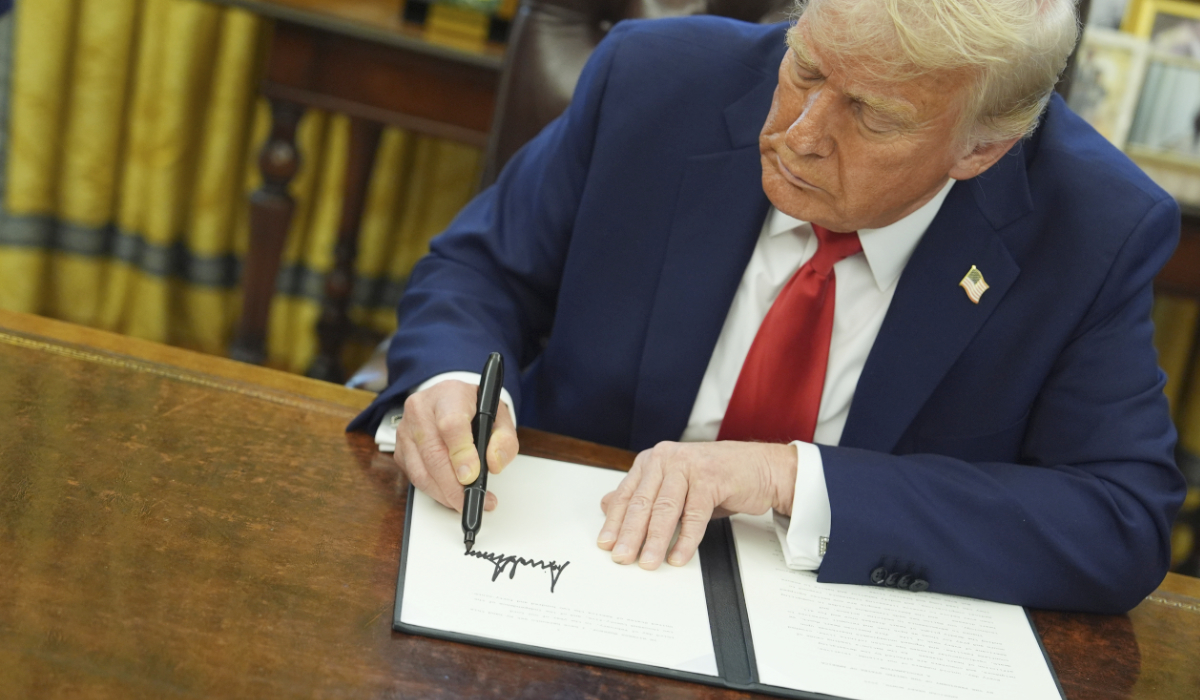
The most consequential element of the bill grants the US president new authority to impose tariffs of up to 100 percent on imports from countries that continue large-scale purchases of Russian oil or natural gas. According to the text of the law, this applies to countries that were among the five largest importers of Russian energy by volume over the previous twelve months. This provision could potentially affect China and India, both major buyers of Russian energy.
The bill has been linked by several outlets to the late Republican Senator Lindsey Graham, who was reportedly a driving force behind the legislation. Some American commentators have described it, given its severity, as 'sanctions from hell.' It represents one of the most comprehensive US sanctions packages against Russia since the start of its full-scale invasion of Ukraine.
India reacted unusually strongly to the bill, according to several reports. The country is the world's third-largest oil importer and one of the biggest buyers of Russian crude. Prime Minister Narendra Modi now faces a difficult trade-off: reducing Russian oil imports could raise domestic fuel prices ahead of politically sensitive regional elections, while continuing current import levels could jeopardize Indian exports to the United States, its largest export market.
China is also seen as a potential target of the new tariff threat. However, reports indicate that the US administration currently intends to refrain from imposing new tariffs on China. This appears to be linked to an upcoming meeting between President Trump and Chinese leader Xi Jinping, who is expected to visit Washington in September. This apparent restraint suggests that the actual application of the tariff threat may be closely tied to the broader diplomatic relationship between Washington and Beijing.
From Ukraine's perspective, the sanctions law is viewed as additional leverage against Russia. Observers in Kyiv argue that Moscow will only negotiate seriously on ending the war if the economic costs of the conflict rise substantially. The new law is intended to increase precisely that pressure by indirectly weakening Russia's energy export revenues.
How the law will be applied in practice remains unclear at this stage. The decision on whether and to what extent the threatened tariffs will actually be imposed rests with the US administration. This uncertainty leaves room for diplomatic negotiation but also carries the risk of economic disruption for affected countries such as India and potentially China. The coming weeks, particularly ahead of the planned meeting between Trump and Xi, are likely to reveal how seriously the United States intends to use its newly granted authority.
International reactions to the bill vary depending on the actor involved. While European and Ukrainian voices largely welcome the measure as a necessary step to increase pressure on Russia, countries such as India and, to some extent, China view the new tariff threats as a potential strain on their economic relations with the United States. How the situation develops further will depend largely on how the US administration exercises its newly acquired powers in practice.
Fast take
US President Donald Trump signed a sweeping sanctions bill against Russia on Friday, shortly after it received congressional approval.
NOFRAME signal
Medium divergence · 13 Sources · 5 Regions
What remains open
Coverage is not fully split, but it is not identical either. That makes the comparison useful: the fact base shows the common core, while the perspectives show where political, regional, or institutional priorities change the emphasis.
Dossier compass
Which media spaces carry the story and how broad the source base is.
Source mix
Underlit angles
- China's diplomatic reaction is barely addressed
- No mention of the reported US restraint toward China ahead of the Trump-Xi meeting
- India's domestic political dilemma is barely elaborated
Open originals
Go straight to the linked articles. NOFRAME does not replace those sources.
Why it matters
Coverage is not fully split, but it is not identical either. That makes the comparison useful: the fact base shows the common core, while the perspectives show where political, regional, or institutional priorities change the emphasis.
Timeline
Meduza · September 19, 2026 at 12:33 AM
Trump signs late Senator Lindsey Graham’s ‘sanctions from hell’ law against Russia
NDTV World · September 19, 2026 at 12:39 AM
Trump Signs Russia Sanctions Bill, Clears Way For 100% India Tariffs
TASS · September 19, 2026 at 01:18 AM
Trump signs legislation expanding sanctions against Russia — White House
Nikkei Asia · September 19, 2026 at 02:03 AM
Trump signs Russia sanctions bill that opens China, India to tariffs