US President Donald Trump used his address to the United Nations General Assembly in New York on Tuesday to deliver an unusually stark warning on the war with Iran. He said he faced a “big decision” to make: either reach a deal with Tehran or “annihilate” the country. In his words, he could “drive them into hell with no chance of survival.” The remark came about eleven minutes into a speech lasting roughly 37 to 40 minutes, much of which focused on the nearly seven-month-old, reportedly unpopular US war against Iran.
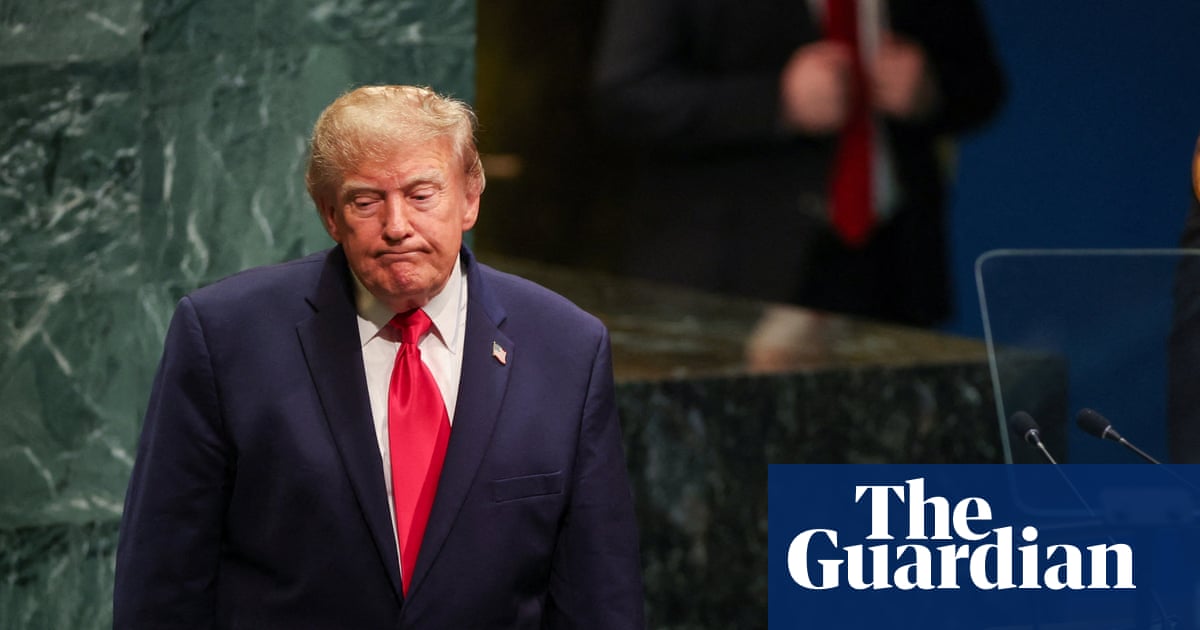
The warning drew significant attention in a forum traditionally devoted to world peace. The Guardian described Trump's open contemplation of annihilating a fellow UN member state as remarkable, drawing comparisons to former Soviet leader Nikita Khrushchev, who had similarly unsettled the assembly with dramatic gestures in the past. The New York Times called the statement a “jarring departure” from the usual tone of the gathering.
At the same time, Trump paired the threat with an offer of negotiation. He said US and Iranian officials had met on Tuesday for the first time in months. He confirmed the talks to reporters on the sidelines of the UN gathering but offered few details about the location, participants, or substance of the exchange. Several outlets, including Al-Monitor and Arab News, characterized this as a “carrot-and-stick” approach — a public threat followed almost immediately by news of renewed diplomatic contact.
On timing, Trump said he expected a deal with Iran only after the US midterm elections on November 3. According to reports from NDTV and Channel News Asia, this set a new timeline for a conflict that had originally been promised as short but has now stretched on for nearly seven months. El País noted that this delay appeared tied to domestic political considerations ahead of the elections.
According to the Straits Times, Iran itself had earlier signaled openness to reviving negotiations to end the conflict. However, the available reports do not provide further detail on the current state or format of any such talks. It also remains unclear what specific conditions the United States is attaching to a possible agreement, or how Tehran has responded publicly to the annihilation threat.
Beyond Iran, Trump's speech touched on a range of other foreign policy issues. He said that since taking office he had helped settle eight wars, and in that context praised Pakistani Prime Minister Shehbaz Sharif as a “terrific man” for his role in ending the Pakistan-India conflict in May 2025, according to Dawn and Geo News. He also addressed Cuba, saying, according to Punch Nigeria and TRT World, that the island's government “will fall.” Cuban Foreign Minister Bruno Rodriguez rejected the claim as false and demanded that Washington respect Cuba's sovereignty.
Other topics covered in the address, according to multiple outlets, included artificial intelligence — Trump rejected the idea of global AI regulation — as well as criticism of the International Criminal Court, which he accused of unfairly targeting the United States and its allies, and remarks concerning Greenland. Notably, according to Yonhap, North Korea was not mentioned in the speech, a departure from previous addresses. The Taipei Times also reported that Trump is considering some form of deal with Belarus, though further details were not specified in available coverage.
What concrete consequences Trump's remarks on Iran will have for ongoing diplomatic contacts, or for the military situation on the ground, remains uncertain. Reactions among UN member states reportedly varied, though detailed statements from individual governments specifically addressing the annihilation threat were not included in the available reporting. Observers note that the combination of harsh rhetoric and the announcement of renewed talks suggests Washington is seeking to apply pressure while simultaneously keeping the door open to a negotiated resolution.
Fast take
US President Donald Trump used his address to the United Nations General Assembly in New York on Tuesday to deliver an unusually stark warning on the war with Iran.
NOFRAME signal
Medium divergence · 18 Sources · 4 Regions
What remains open
Coverage is not fully split, but it is not identical either. That makes the comparison useful: the fact base shows the common core, while the perspectives show where political, regional, or institutional priorities change the emphasis.
Dossier compass
Which media spaces carry the story and how broad the source base is.
Source mix
Underlit angles
- Detailed analysis of Trump's ICC criticism and its international-law implications
- Deeper analysis of the risk of military escalation against Iran
- Detailed analysis of Western allies' reactions to the Iran threat
Open originals
Go straight to the linked articles. NOFRAME does not replace those sources.
Why it matters
Coverage is not fully split, but it is not identical either. That makes the comparison useful: the fact base shows the common core, while the perspectives show where political, regional, or institutional priorities change the emphasis.
Timeline
Al-Monitor · September 22, 2026 at 09:30 PM
Trump threatens Iran with 'hell' but unveils fresh talks
Globe and Mail · September 22, 2026 at 09:34 PM
Five key moments from Trump's speech at the UN
NY Times World · September 22, 2026 at 09:49 PM
At U.N., Trump Says He Will Strike a Deal With Iran or ‘Annihilate’ It
Taipei Times · September 23, 2026 at 02:00 AM
Trump mulls deal with Belarus