Venezuela's interim President Delcy Rodríguez told the United Nations General Assembly in New York that her country will hold elections and undergo a gradual transition to “full democracy.” In her first address to the body since taking office, she said Venezuela must abandon the “extremism” of the past and described the nation as being in the midst of an “orderly, institutional and verifiable” democratic transition. She did not, however, give a specific date for the elections. The announcement carries significant weight, as it is the first formal statement outlining a path toward new elections since American forces captured former President Nicolás Maduro in a raid earlier this year.
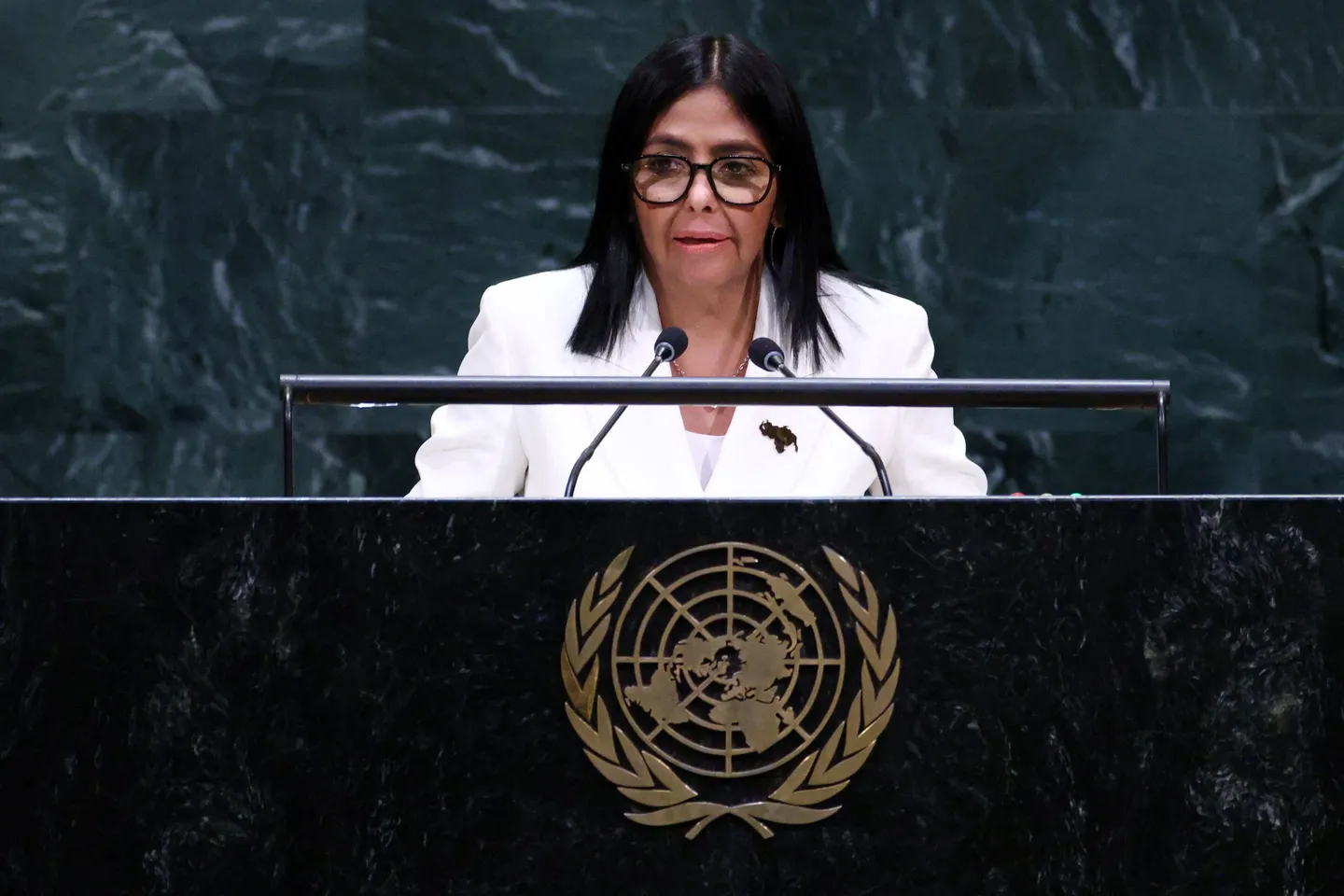
Rodríguez, widely described as a close ally of Maduro who assumed power after his capture in January, told delegates: “There will be elections in Venezuela.” According to her remarks, the country is undergoing a transition whose timing will ultimately be determined by the Venezuelan people themselves — the “right moment,” she said, is for the population to decide. Several international outlets highlighted this vague timeline as the central and most notable element of her speech, since it constitutes a promise without a verifiable commitment.
According to Rodríguez, the Venezuelan government has already initiated talks with opposition sectors and pledged that all political forces in the country would be guaranteed participation in the announced process. The available reports do not specify further details about the location, format, or outcomes of these talks, nor do they name which opposition figures or parties are currently involved.
The backdrop to this speech is Venezuela's dramatic political shift since January of this year, when American special forces captured longtime President Nicolás Maduro during a raid in Caracas and brought him to the United States. According to multiple reports, Maduro has since been held in a prison in Brooklyn, New York. Rodríguez took over leadership of the South American country following that event and is described in several reports as a transitional figure backed — or even “handpicked” — by the US administration under President Donald Trump.
Alongside her UN address, another notable development took place: a day earlier, Trump met Rodríguez in person for the first time, on the sidelines of the UN General Assembly, at a hotel in Manhattan only a few miles from the prison where Maduro is being held. According to several sources, this marked the first direct meeting between a sitting US president and a representative of the so-called Chavista movement since Bill Clinton met Hugo Chávez in 1999. Rodríguez described the encounter as “historic” and spoke of a new phase in relations with the United States. Reports indicate that Venezuelan opposition figure María Corina Machado was not included in the meeting.
Reports differ slightly in their emphasis on aspects of the speech: some outlets focus on the apparent opening toward the United States and its economic dimension — including a reference in one report to Trump himself describing Venezuelan oil as potential “spoils” in his own UN address — while others place greater emphasis on the democratic rhetoric and the absence of a concrete election date. However, all reviewed sources agree that Rodríguez announced elections without setting a timeline, and that she referenced ongoing dialogue with the opposition.
It remains unclear how credible these announcements are and whether they will lead to elections that are broadly recognized as free and fair by the international community. According to the available reports, the international community has responded with skepticism, and no binding commitments regarding timing, format, or international observation of the promised elections have been made public. The speech also left unaddressed the roles of Venezuela's judiciary, armed forces, and its broader economic situation within the transition process.
Several questions therefore remain open regarding Venezuela's political future: the fate of Maduro, who remains in US custody; the progress of the announced talks with the opposition; and the actual involvement of opposition figures such as Machado, who was notably absent from the meeting with Trump. How the newly forged ties between Washington and Caracas will concretely affect the political transition — and whether a firm election date will eventually be set — remains uncertain at this stage.
Fast take
Venezuela's interim President Delcy Rodríguez told the United Nations General Assembly in New York that her country will hold elections and undergo a gradual transition to “full democracy.
NOFRAME signal
Stable coverage · 13 Sources · 4 Regions
What remains open
The source picture is relatively consistent. That still makes the details worth reading: small differences in wording, omissions, and source selection can reveal what each region treats as important.
Dossier compass
Which media spaces carry the story and how broad the source base is.
Source mix
Underlit angles
- No notable omissions in the current source comparison.
Open originals
Go straight to the linked articles. NOFRAME does not replace those sources.
Why it matters
The source picture is relatively consistent. That still makes the details worth reading: small differences in wording, omissions, and source selection can reveal what each region treats as important.
Timeline
Al Jazeera · September 24, 2026 at 04:23 AM
Venezuela’s Rodriguez pledges elections, path forward in UNGA speech
South China MP · September 24, 2026 at 04:29 AM
At UN, Venezuela’s acting president promises elections without setting date
Sputnik · September 24, 2026 at 06:25 AM
Venezuela Begins Political Transition, Elections to Follow — Rodriguez
NPR World · September 24, 2026 at 07:40 AM
Venezuela's acting leader promises elections at the 'right moment'